Use
Run a first model.
Install a release, start from a maintained input, then check the mesh and inspect diagnostics.
Getting started QF Solver
QF Solver is built so engineers, students and teams can trace a result through its assumptions, equations, implementation and evidence. See what a route can do, and where its evidence stops.
Every published route keeps its scope, evidence and limitations visible.
QF Solver is an open, inspectable FEM project. Equations, assumptions, development steps, relevant scripts, test plans and recorded results are published together so users can judge whether a route fits their model and where its evidence stops.
The goal is to make reliability review more efficient, not to replace case specific engineering judgement or imply that every route is validated.
Three clear entry points take you from running a model to understanding the method and checking its evidence.
Install a release, start from a maintained input, then check the mesh and inspect diagnostics.
Getting startedFollow the equations from physical assumptions through implementation and the numerical route.
White box catalogueRead the exact model, observables, results and limits behind each published claim.
Verification & validation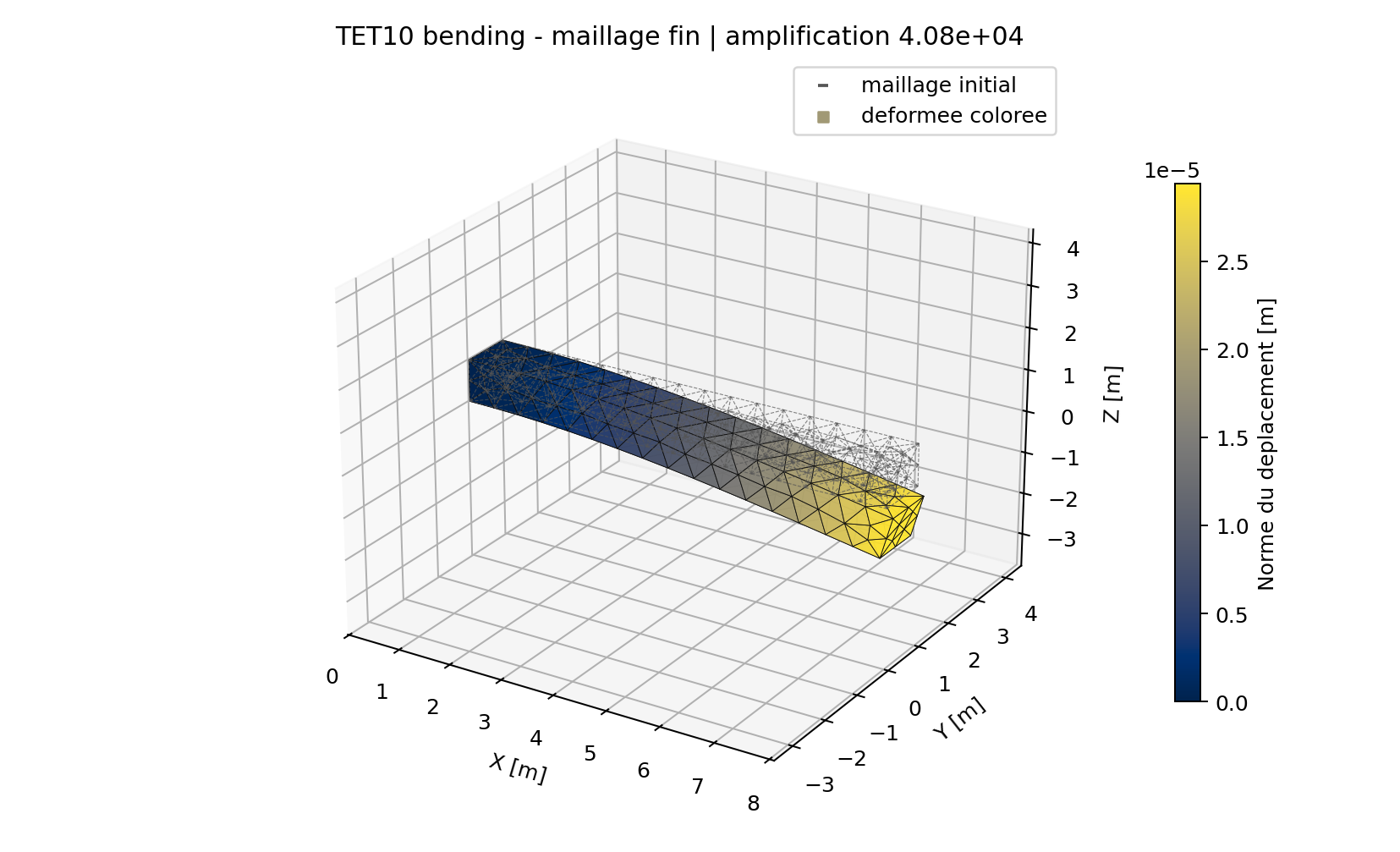 Open calculation dossier
 A TET10 cantilever deformation view tied to the same bounded bending study as the mesh convergence curve. The displayed deformation is amplified 40,800 times so its shape can be seen. This preview links to the model, convergence record, source and limitations.
Roadmap items describe directions to investigate, not feature promises or delivery dates.
Published 7 October 2026. Read each available tag and its scope summary.
Browse all versions Install from PyPI ↗Stabilization and targeted corrections. Close current investigations, add focused regression coverage, and keep each capability claim matched to its validated route.
Read the next planThe 0.2.8 registry remains the source for published maturity statuses. A package release does not automatically promote a qualification record.